Sustainable environmental simulation in the laboratory
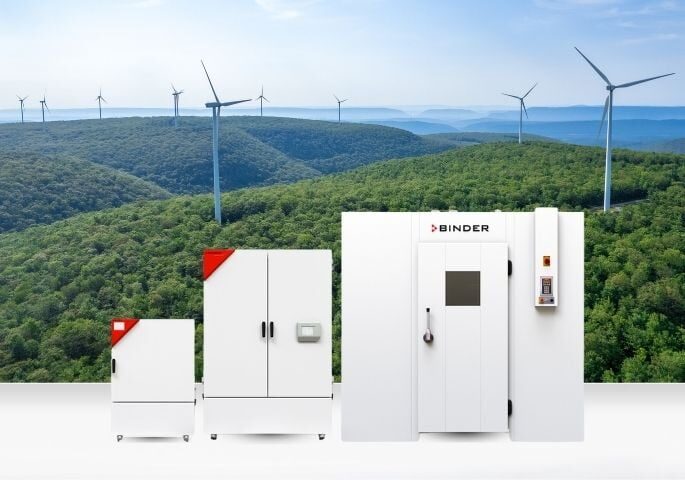
Laboratories face the challenge of combining research and analysis with the lowest possible energy consumption and careful use of resources. Processes such as environmental simulation and cooling are energy-intensive and affect both the environment and operating costs. In a guest article in the trade journal Laborpraxis, BINDER explains how well-considered measures can save energy and improve sustainability in the laboratory.
Resource-efficient units. The climate chambers and incubators are developed according to ecodesign principles, so that across their entire life cycle they are as resource-efficient, durable and recyclable as possible. This includes high-quality foam insulation to reduce energy consumption, interiors made of recyclable stainless steel and housings of galvanised sheet steel with a low-emission, solvent-free coating, aligned with ISO 14001 and ISO 50001 standards.
Natural refrigerants and efficient cooling. In new climate chambers BINDER uses exclusively natural refrigerants such as CO₂, isobutane or propane and dispenses with fluorinated low-GWP refrigerants. In combination with the natural refrigerants, the modern converter compressors work very energy-efficiently and thus save additional energy over the service life of the units. Climate chambers of the ECO series work with Peltier technology; they cool thermoelectrically and manage entirely without refrigerants. The energy efficiency of the units is central, as it has a direct influence on emissions and operating costs. Thanks to inverter cooling technology, constant climate chambers of the KBF PRO series consume over 40 percent less energy than their predecessors. They show their advantages not least in continuous operation: low power consumption, less waste heat and a long service life for the components.
Long life cycle and circular economy. The modular design of BINDER climate chambers and a spare parts guarantee make repairs possible without replacing complete systems, which extends the service life, avoids waste and conserves resources. In addition, materials are used that can be recycled or reused at the end of their service life. Stainless steel and galvanised sheet steel, for example, can be returned almost entirely to the material cycle.
Climate-neutral by 2045. BINDER is pursuing the goal of producing CO₂-neutrally by 2030 and becoming fully climate-neutral by 2045. This goal is supported by certified environmental and energy management, energy generation through the company's own photovoltaic system and recovery of machine waste heat, as well as digital and resource-efficient processes. Through continuous process optimisation BINDER already reduced its CO₂ emissions significantly in 2024, by more than 40 percent compared with the average for 2019 to 2021.
Laboratories benefit from the sustainability strategy in practical terms: energy-efficient, durable units help to meet environmental targets and regulatory requirements and to lower operating costs.
Detailed information on sustainable environmental simulation with climate chambers from BINDER can be found in the current issue of Laborpraxis.